


Back to Facilities
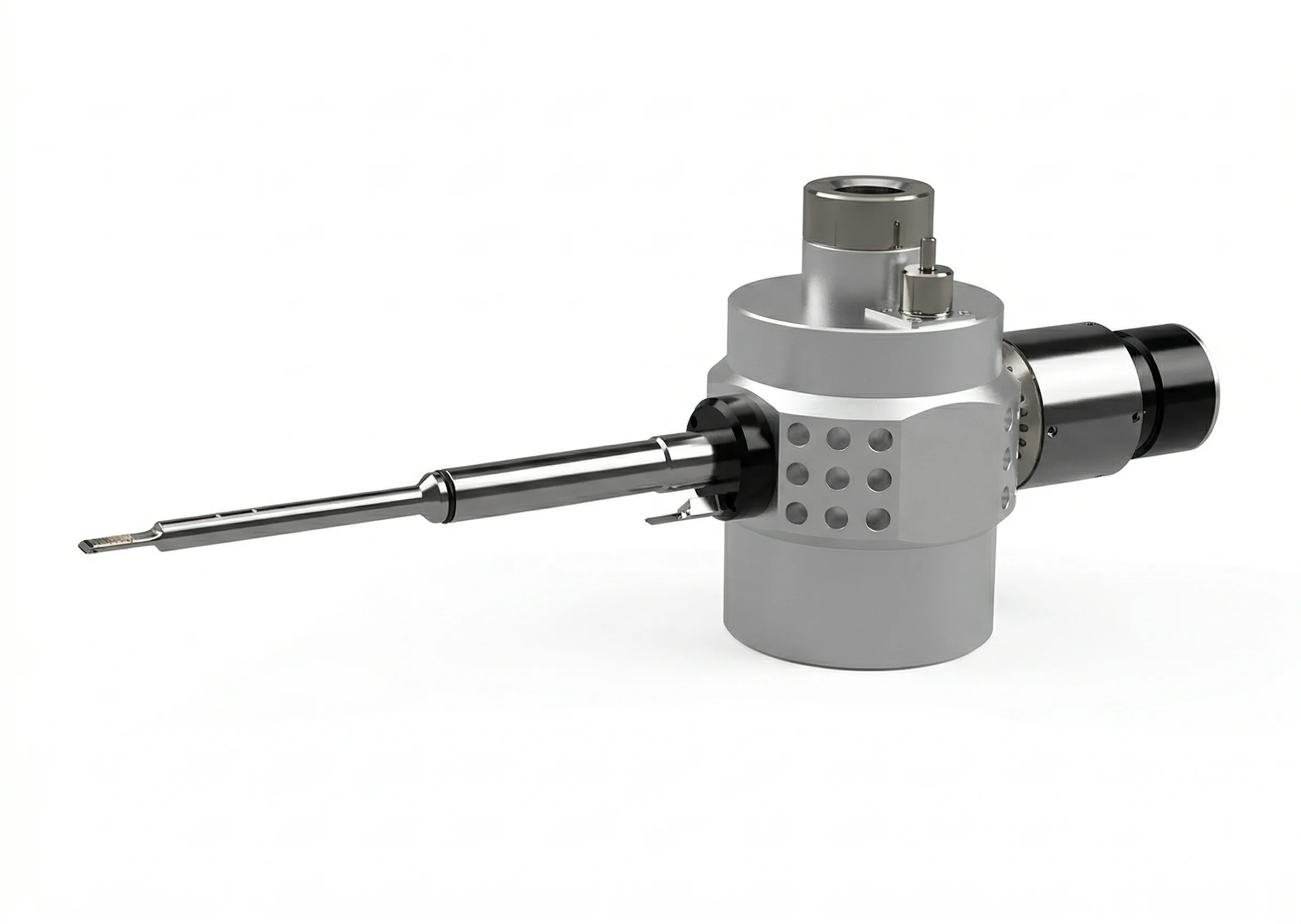
Mel-Build DCT Holder
TEM Holder MaintenanceMel-Build — Double Tilt LN2 Vacuum Transfer Holder
Double tilt LN2 cryo-transfer holder with vacuum transfer capability for damage-free observation of beam-sensitive and air-sensitive materials. Zeolite-free design enables stable, repeatable cryo experiments. (Currently under repair; estimated 2–3 months.)
Type Cryo Vacuum Transfer
Temperature -170 °C
Tilt X ±30° / Y ±20° (ST PP)
Vacuum transfer <1×10⁻³ Pa
Resolution 0.24 nm (Au NP FFT 002)
Drift rate 5 nm/min
Temp stability ±0.005 °C (MTC-002)
Coolant LN2 (1.5 h hold, refillable)
Cradle/Cover 99.9% Be (low-background EDS)
Sample φ3 mm TEM grid, sandwich clamp
Purchased 2024. 08
On this page
Overview
The Mel-Build DCT is a double tilt LN2 cooling vacuum transfer holder designed for cryogenic TEM observation of air-sensitive and beam-sensitive materials. It provides guaranteed cooling to -155 °C (-170 °C actual) with vacuum transfer capability, enabling damage-free specimen loading from glove box to TEM column. The zeolite-free, patented cooling mechanism allows stable and repeatable cryo experiments without heating or vacuuming between sessions.
Key Features
- Double tilt at cryo temperature: X ±30°, Y ±20° at standard pole piece, enabling crystallographic zone axis alignment at cryogenic temperatures
- Vacuum transfer: Retractable tip mechanism keeps specimens under vacuum (<1×10⁻³ Pa) during transfer, protecting air-sensitive materials from oxidation
- Zeolite-free cooling (patented): No zeolite desorption — stable cooling even after repeated LN2 refills without regeneration
- High-precision temperature control: Meltronic Controller MTC-002 with ±0.005 °C stability minimizes thermal drift for HR imaging
- Atomic resolution at cryo: 0.24 nm resolution confirmed with Au nanoparticles; HR STEM-EDS mapping demonstrated on SrTiO3 at -170 °C
- 99.9% Be cradle and cover: Minimizes spurious X-ray background for high-sensitivity EDS analysis at cryogenic temperatures
- Glove box-friendly: Dedicated safety operation stand for easy specimen mounting inside glove box
Applications
- Air-sensitive battery materials (sulfide solid electrolytes, Li metal anodes)
- Beam-sensitive materials (halide perovskites, polymers, MOFs)
- Cryo-STEM imaging and EDS mapping at atomic resolution
- Low-dose observation of radiation-sensitive specimens